- Impact Growth Capital Newsletter
- Posts
- Impact Growth Capital Newsletter Institutional Insights for Capital Allocators
Impact Growth Capital Newsletter Institutional Insights for Capital Allocators
New Fed Leadership: What the Warsh Nomination Means for Capital Markets

Impact Growth Capital
February 02, 2026
For Accredited Investors & Family Offices:
We do not market deals to the public.
We Grant Access to our specific investment thesis Barbell Strategy execution via Work Force Housing and Vertical SaaaS though our:
Investor Council
We are currently reviewing applications for new members. If you are focused on capital preservation and asymmetric growth, you may apply for access here.
This week at IGC:
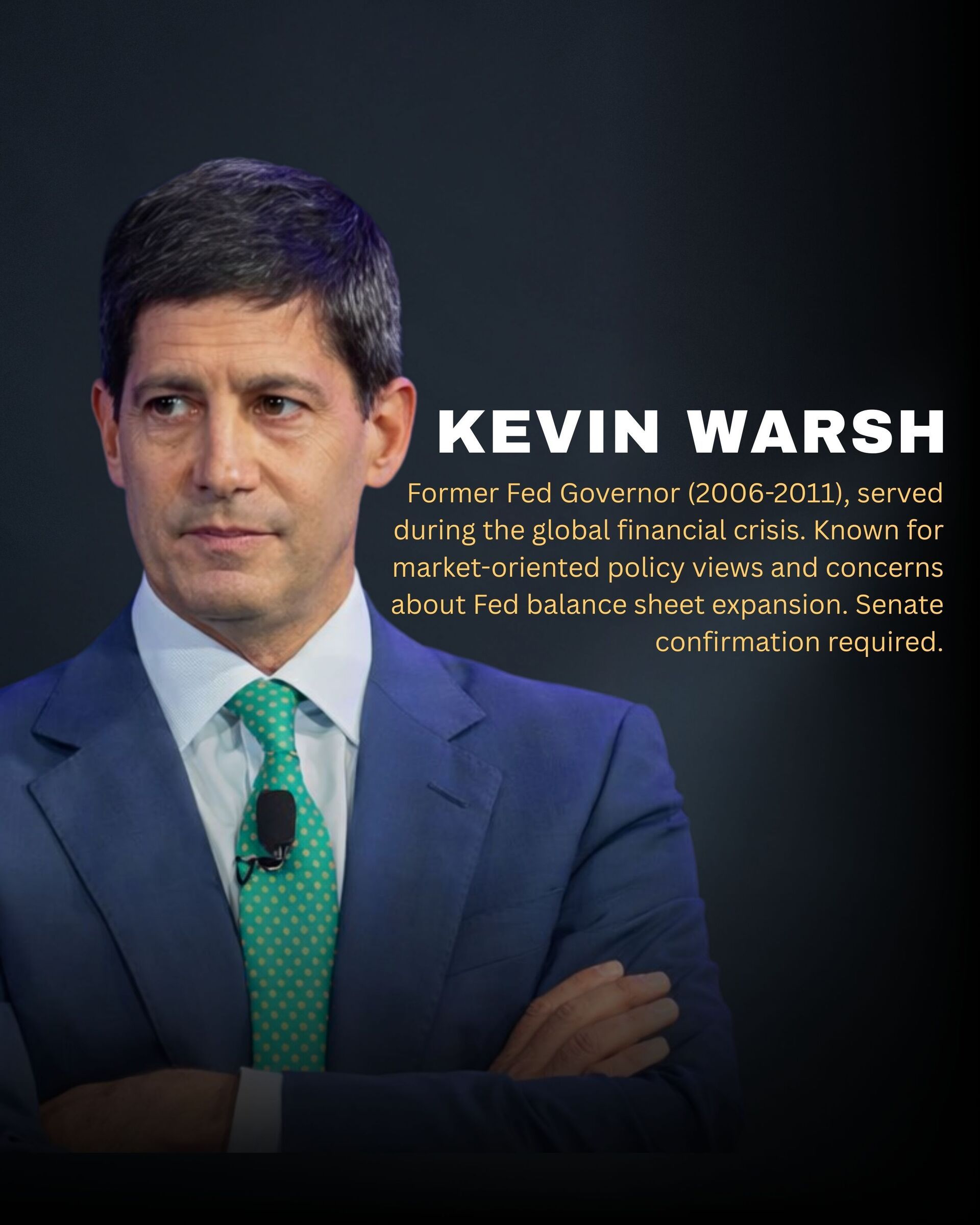
Kevin Warsh’s nomination as the next Fed Chair signals a potential policy shift that could reshape liquidity, credit conditions, and real asset pricing as market expectations adjust.
President Trump has nominated Kevin Warsh to succeed Jerome Powell as Federal Reserve Chair when Powell's term ends in May 2026. The nomination concludes months of speculation and introduces a potential shift in monetary policy direction.
Core Insight
Leadership transitions at the Fed recalibrate market expectations around rates, liquidity, and credit availability. For capital allocators, understanding the policy framework shift matters as much as tracking economic data itself.
Three Variables to Monitor
1. Policy Framework Evolution
Warsh is viewed as more market-signal responsive than Powell, with concerns about sustained balance sheet expansion. His confirmation hearings and early statements will reveal whether he prioritizes inflation control or growth accommodation. This is not academic it determines credit availability and real asset financing costs.
2. Balance Sheet Trajectory
Early reports suggest Warsh may explore reducing the Fed's balance sheet more aggressively than Powell. A smaller balance sheet means tighter liquidity conditions, wider credit spreads, and higher refinancing costs particularly for leveraged real estate and private credit strategies.
3. Rate Path Uncertainty
Warsh faces competing pressures: political demands for lower rates versus inflation risks from sustained fiscal expansion. This creates directional uncertainty that compresses forward visibility for duration-sensitive assets and real estate underwriting assumptions.
Implications for Real Asset Allocators
Leadership transitions introduce regime uncertainty not because policy changes immediately, but because market expectations recalibrate.
CRE financing costs face repricing risk. If Warsh signals tighter monetary conditions, commercial real estate valuations and cap rates will adjust before actual policy shifts occur.
Workforce housing demand remains structural. Monetary policy affects financing costs, but necessity-based housing demand is independent of Fed leadership. This is why we focus on operational control, not rate direction bets.
Over-leveraged operators face refinancing pressure. Sponsors who underwrote to Powell-era assumptions about liquidity may find Warsh-era credit availability more constrained. This creates distressed acquisition opportunities for disciplined capital.
Portfolio Positioning Through Leadership Transitions
At IGC, we do not attempt to predict Fed policy outcomes. We build portfolio architecture that performs across policy regimes.
The Barbell Strategy is designed for exactly this environment:
Safety Weight — Workforce Housing: Demand driven by necessity, not credit cycles. Income with inflation linkage. Tangible assets with operational control. Performance independent of Fed leadership transitions.
Growth Weight — Vertical SaaS: Value creation driven by execution, not public market liquidity. Recurring revenue models insulated from Fed balance sheet policy. Asymmetric returns uncorrelated to monetary regime shifts.
This structure avoids overconcentration in duration-sensitive assets that require correct predictions about Warsh's policy priorities.
Perspective: Eleven years in Air Force Intelligence taught me that leadership transitions create noise before they create clarity. Markets will speculate, headlines will multiply, and consensus will shift repeatedly. Disciplined allocators focus on structures that perform regardless of who chairs the FOMC.
Jesse Sells
Founder | Impact Growth Capital
We work with a limited group of family offices and institutions
seeking exposure to real assets through operational discipline,
not passive market exposure.
If you would like to review our current investment approach
and portfolio construction, schedule a confidential discussion.
Have a topic or question you want to see covered? Reply directly to this email.
